
Moderated Conversations & Panels
Turning complex, polarized topics into conversations people can actually learn from
Overview
- Create psychological safety in conversations where stakes and emotions are high.
- Keep discussions grounded in evidence without shutting down disagreement.
- Surface underlying assumptions, incentives, and blind spots shaping opinions.
- Prevent polarization, performative conflict, and oversimplification.
- Help audiences leave with clearer thinking, not just louder opinions.

Details
What These Conversations Enable
Panels often fail because no one is managing the psychological dynamics in the room. My background in behavioral science allows me to work with the psychology of opinion-forming and bias in real time — helping people speak more clearly, feel safer doing so, and engage with opposing views without the conversation breaking down.
Such approach makes it possible to:
- disagree without escalation or defensiveness,
- explore nuance without losing momentum,
- include multiple perspectives without turning the discussion into a shouting match,
- surface what’s really driving opinions beneath polished arguments,
- give audiences insight they can actually use after the event.
Topics These Panels Are Especially Suited For
I’m most often invited to moderate conversations where the subject matter is sensitive, complex, or emotionally charged, including:- Technology, AI, and fear-driven narratives: why anxiety spreads faster than facts, how uncertainty shapes adoption, and how to introduce AI without stripping work of meaning.
- Work, wellbeing, and burnout: why exhaustion persists even in organizations that genuinely care.
- Leadership and organizational change: why change efforts meet resistance, and how cognitive biases shape leadership decisions.
- Social polarization and identity: why debates slide into “us vs. them” thinking, and how identity and evolutionary psychology shape public discourse.
- Ethics and responsibility: how good intentions collide with real human behavior in CSR, public policy, and organizational decisions.
How I Moderate Conversations
I moderate conversations by understanding what drives them. In practice, that means:- listening for psychological drivers, not just stated opinions,
- naming patterns when discussions start to derail,
- slowing things down when certainty arrives too quickly,
- challenging oversimplified narratives without putting people on the defensive,
- creating space for disagreement without turning it into spectacle.
References
See What My Clients Have to Say

Jowita Michalska
Digital European Union Ambassador | Chapter Ambassador at Singularity Group
Julia’s ability to bridge science and strategy is outstanding. She brings academic depth and translates it into engaging, relevant, and immediately applicable content. Her sessions are insightful and refreshing, especially in corporate environments hungry for meaning and clarity.
What stood out most was her style — calm yet impactful, intellectually rich yet deeply human. Participants consistently praised her ability to spark reflection and shift their thinking. Julia doesn’t lecture — she creates space for real transformation.
I see Julia as a go-to expert for projects involving leadership development, culture design, employee experience, and purpose-driven innovation. If you’re building something meant to last — and feel good to be part of — you want her in the room.
What stood out most was her style — calm yet impactful, intellectually rich yet deeply human. Participants consistently praised her ability to spark reflection and shift their thinking. Julia doesn’t lecture — she creates space for real transformation.
I see Julia as a go-to expert for projects involving leadership development, culture design, employee experience, and purpose-driven innovation. If you’re building something meant to last — and feel good to be part of — you want her in the room.
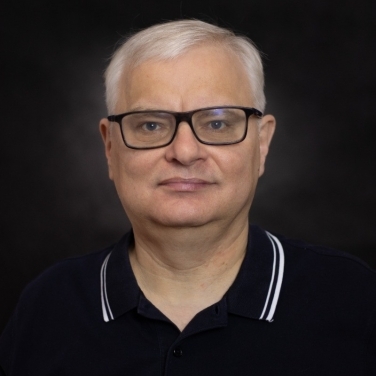
Miro Konkel
Journalist at Puls Biznesu
As a journalist for the Polish daily Puls Biznesu, I sometimes ask Julia Kolodko to comment on various phenomena related to the labor market, careers or leadership from the perspective of behavioral economics and evolutionary psychology. Each time, I am pleased with our creative collaboration.
Julia is an expert who combines theory with practice, scientific discovery with great life wisdom. She always shares the highest quality and latest knowledge and original insights. She sheds new light on old problems or age-old ethical dilemmas. Although I generally cover difficult topics, she explains them simply and understandably. I'm not the only one who thinks so. PB readers think the same way, resulting in a large number of their positive responses.
Julia Kolodko deserves to be called an opinion leader. At the same time, she is also an extremely kind and nice person. I recommend her posts. A real intellectual feast.
Julia is an expert who combines theory with practice, scientific discovery with great life wisdom. She always shares the highest quality and latest knowledge and original insights. She sheds new light on old problems or age-old ethical dilemmas. Although I generally cover difficult topics, she explains them simply and understandably. I'm not the only one who thinks so. PB readers think the same way, resulting in a large number of their positive responses.
Julia Kolodko deserves to be called an opinion leader. At the same time, she is also an extremely kind and nice person. I recommend her posts. A real intellectual feast.
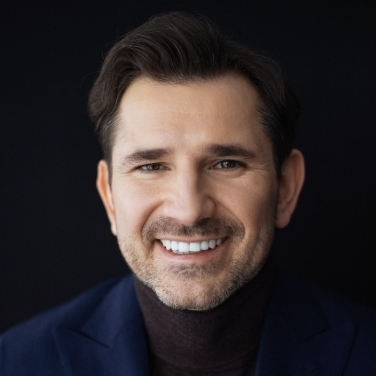
Maciej Noga
Co-Founder and Chairman of the Supervisory Board of Grupa Pracuj
I had the pleasure of working with Julia on several occasions. She always exceeded my expectations regarding her diligence in preparation. Whatever she does, she does good. She puts her heart and her mind into her work. She is fueled by passion and always strives for excellence. Her knowledge and understanding of behavioral science come from academia, yet she knows how to transform complex problems into simple but effective and practical business solutions.


Global warming is one of the toughest problems to solve if we consider how our irrational minds work. This is why I support World Land Trust, a foundation that does great things to protect ecosystems around the world.
© Julia Kolodko Privacy Policy Terms and Conditions